How to bring up role play, agree on it, and set the room so it feels like a scene instead of a party. Easy places to start, what to wear that you'll wear again, and how to check in afterward.
Role play sounds like a bigger step than it is. Most couples already do a version of it: the night you dress up for dinner and flirt like you've just met, or the voice one of you uses when you're teasing. Role play is doing that on purpose, for an evening, with both of you in on it.
It doesn't need a costume. A costume pulls the attention to the outfit, and the outfit usually wins. What makes a scene work is the room, the light, and one or two things you'd happily wear on an ordinary night.
Role play, in short
- Talk about it first, outside the bedroom, and agree on a pause word.
- Pick a character, not a script: a name, a reason you're both there, one detail.
- Set the room like a set: lamps low, phones away, the door closed.
- Wear something you'd wear again: silk, lace, a good shirt, a mask.
- Laughing is allowed. Check in afterward.
Start with a conversation
Bring it up somewhere neutral, over coffee or on a walk, and not in the middle of a moment. Keep it light and easy to answer: "Is there a version of us you'd like to try for a night?" Make sure "not yet" is a perfectly good answer.
Before the night, agree on four things:
- The scenario. Who you are and where you are, in a sentence or two.
- What's in and what's out. Anything either of you doesn't want stays out, no explanation needed.
- A pause word. Saying it stops everything, right away.
- The way out. Either of you can step out of character at any point, for any reason.
Talking about boundaries and safewords goes into this in more detail. If saying it out loud feels like a lot, try Yes / No / Maybe first: you each mark ideas in private, and you only see the ones you both said yes or maybe to.
Characters, not scripts
A script falls apart the moment someone forgets a line. A character holds up. Decide three things and leave the rest open:
- Who you are. A name helps more than you'd think.
- Why you're both in the room. A first meeting, a reunion, a favor owed.
- One detail. A habit, a job, a secret. Something to play with.
Then follow it wherever it goes. You don't have to be good at acting. You only have to be willing to stay a little longer in a slightly different version of yourselves.
A few easy places to start
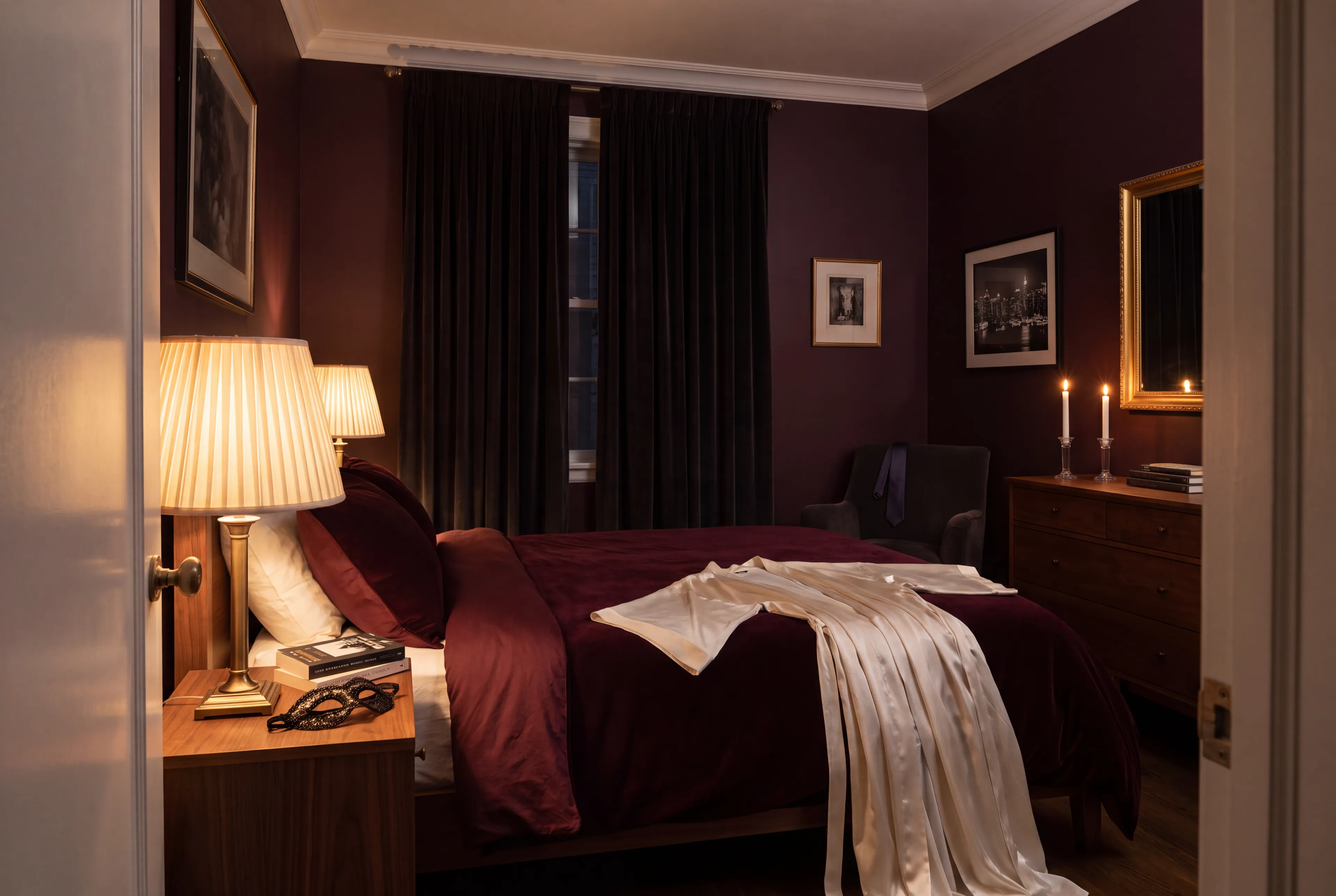
- Strangers at the hotel bar. Meet in the kitchen as if you've never met. One of you invites the other upstairs. Set the bedroom like a boutique hotel suite: crisp white bedding, one lamp, nothing personal in sight.
- The first date, again. You know how the first one went. Play it as if you don't, and let it go further than it did then.
- After hours. A pressed shirt with the sleeves rolled, a desk lamp, a door that closes. The Study, with its leather, wood and books, does half the work.
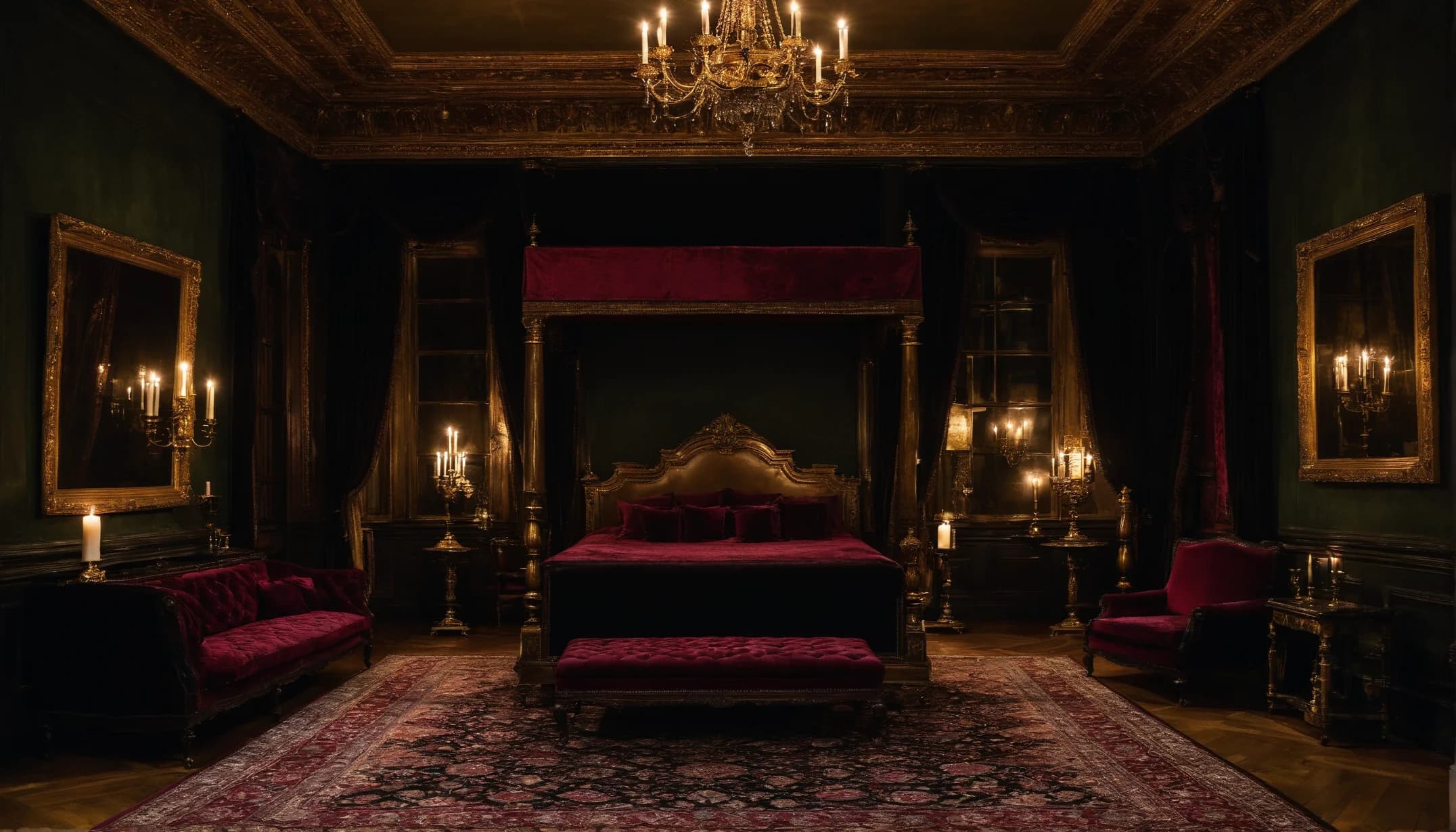
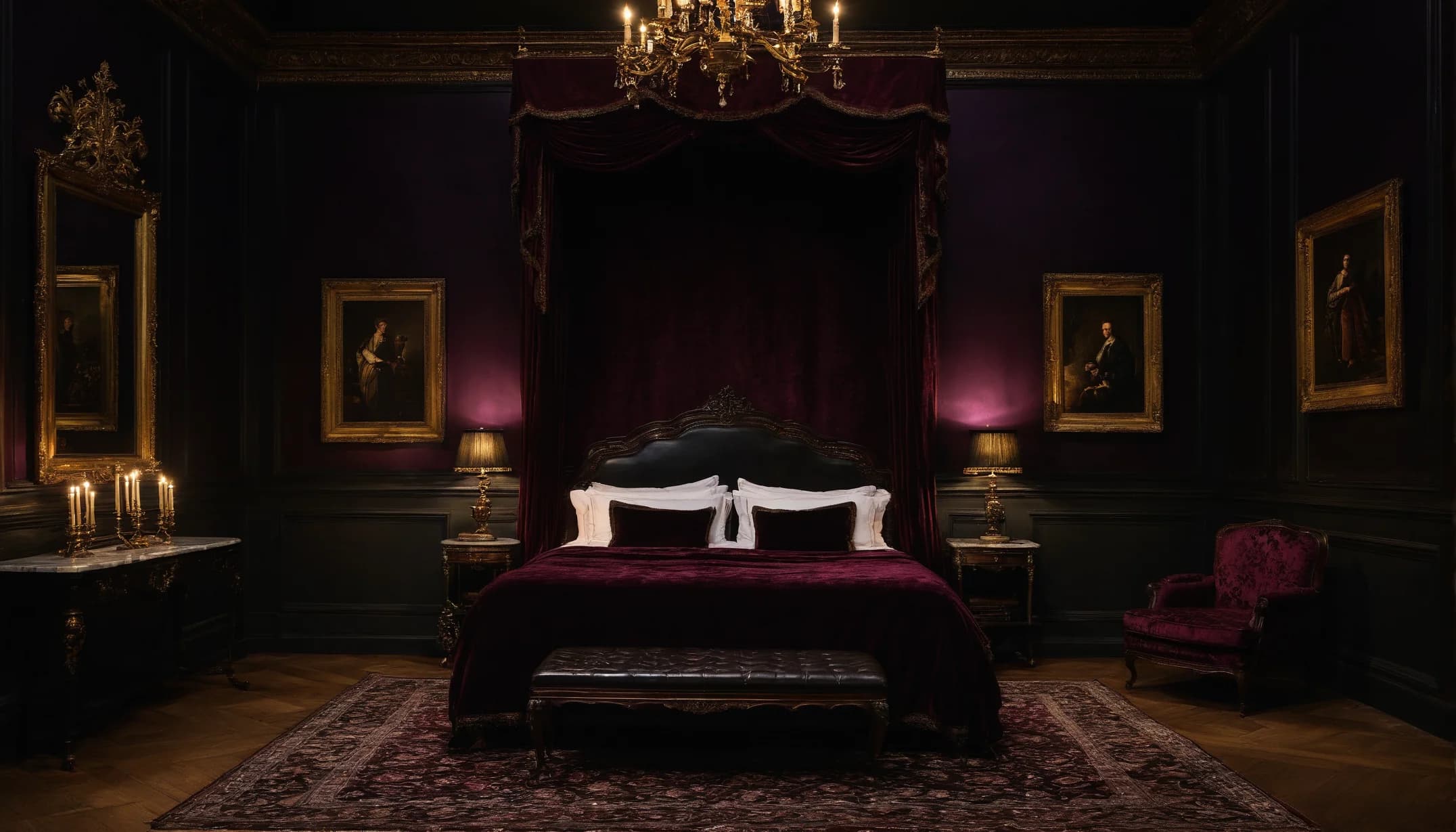
- The masquerade. Masks on, lights low, nobody speaks above a whisper. It suits a Gothic Romance room with deep color and candles, and around Halloween it's an easy sell.
- A weekend in Paris. A city you've never been to together, an apartment that isn't yours. Silk, a mirror, a record playing. The Parisian Boudoir style is built for it.
The room is the set
More than anything you wear, the room is what tells you both that tonight is different.
- Light. Turn the overhead off. Two lamps with warm bulbs and a few candles in proper holders are plenty. Warm bedroom lighting has the details.
- Sound. Music chosen for the characters, not your usual playlist.
- Clear the everyday. The laundry basket, the work bag, the tangle of chargers. The ten-minute room reset gets it done fast.
- One prop, at most. A mirror, a book on the nightstand, a key on the dresser. Props are where most scenes tip into comedy.
What to wear (that you'll wear again)
Skip the costume aisle. Buy things that feel good on an ordinary night too, so they earn their place in the drawer.
A silk robe is the easiest start. It's how you answer the door in character, and it's just as good for afterward.
A real silk shirt covers a lot of ground. Buttoned up, it's the office look. Worn on its own, half buttoned, it's the whole outfit.
For the masquerade, a lace mask that looks like it came from a dressmaker, not a party store.
If lingerie is part of the character, stockings or a lace bodysuit say more than anything in a bag marked "costume".
And a blindfold, for the version where one of you would rather not see what's coming.
For the other half of the scene, a good shirt, a dark robe or a tie is all it takes. Most of it is already in the closet.
Staying in it, and stepping out
You'll break character. Everyone does. Laugh, then step back in, or don't. Nothing has to be finished.
Go slower than you think you need to. You can always add more next time, and a scene that ends a little early is a better memory than one that ran past where either of you wanted to be.
The pause word is for anything that stops feeling good. When it's used, the scene is over: no questions in the moment, no sulking afterward. Negotiating something new has more on keeping it easy to say.
Afterward
Out of character, talk for a few minutes. What worked? What felt awkward? What would you try next time? Keep it light, and lead with what you liked. The art of aftercare covers the hour after in more depth.
Common questions
How do you bring up role play with a partner?
Somewhere neutral, outside the bedroom, as a question rather than a request. Something like "Is there a version of us you'd like to try for a night?" works, and so does sharing one idea of your own first. Make "not yet" an easy answer.
Do you need costumes for role play?
No. A costume tends to pull the attention to the outfit. Clothes you'd wear anyway, like a silk robe, a good shirt or a lace mask, plus a room set with low light and music, usually work better.
What are some easy role play ideas for couples?
Strangers meeting at a hotel bar, a replay of your first date, after hours at the office, a masquerade, or a weekend in a city you've never visited together. Each one works with a character and a setting rather than a script.
What if one of us laughs?
Then you laugh together and step back in, or call it a night. Laughing is part of why role play brings couples closer. It isn't a sign it went wrong.
Scenes to try
All scenesScenes are ideas for an evening at home, each tied to a room style, with a pause word built in.