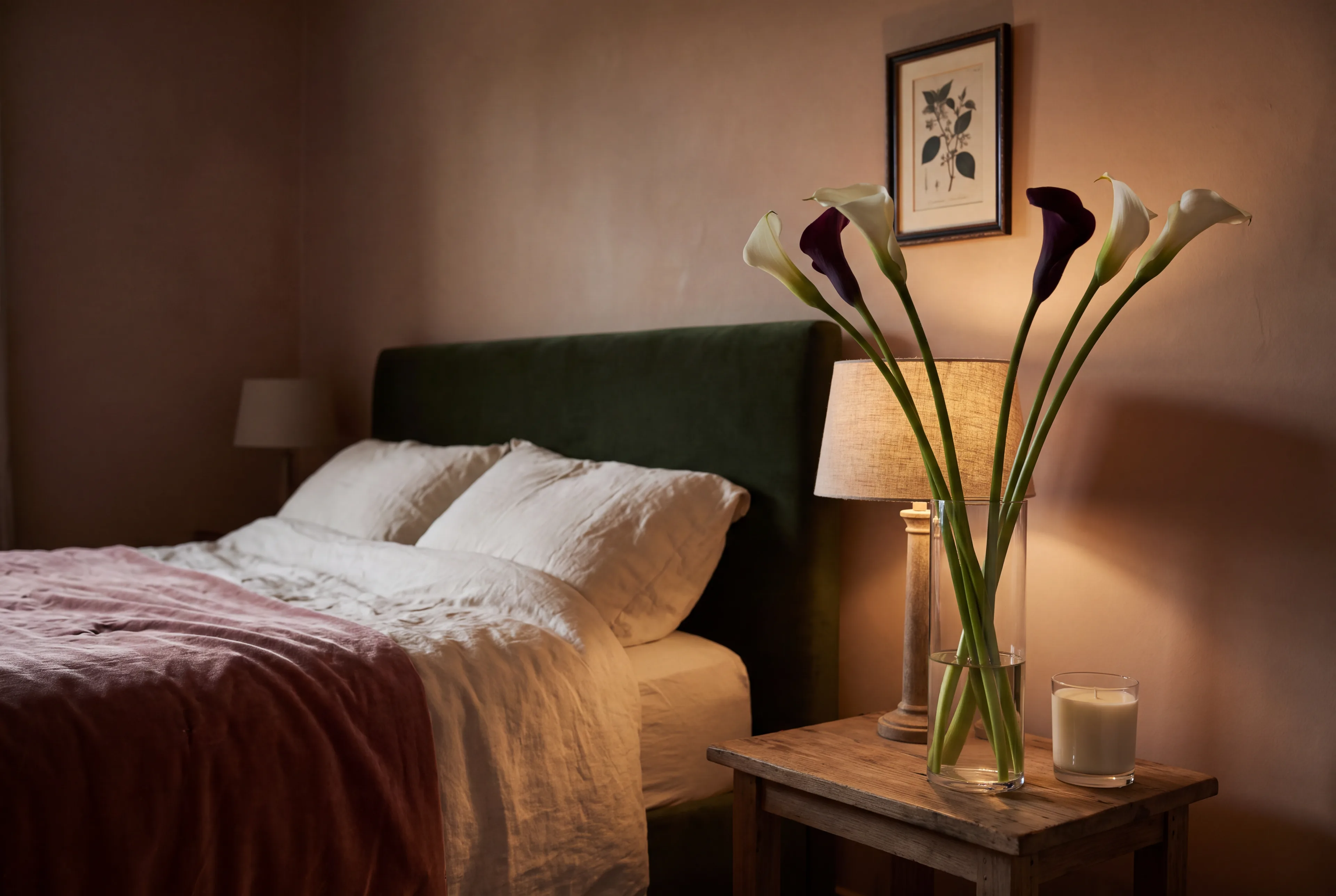
Calla lilies are having a moment. How to choose bedroom flowers by mood and scent, where to put them, and what to skip if you have a cat or dog.
Calla lilies have quietly taken over bridal bouquets and dinner tables this year, and they make just as much sense on a bedroom dresser. A few long stems in a tall vase do more for a room than a big round bouquet ever could. They catch the lamplight, they barely smell, and they last.
This guide starts with callas and then widens out: how to choose flowers for a bedroom by mood, which ones bring scent and which stay quiet, where they go (and where they don't), and what to skip if you share the room with a cat or dog.
Bedroom flowers, in short
- Sculptural: three to five long stems of one kind, like calla lilies or tulips, in a tall vase.
- Scented: one fragrant thing, like a potted jasmine or a few garden roses. One, not three.
- Lush: a low, loose bunch of peonies or garden roses for a special night.
- Placement: the dresser or a side table near a lamp, not the nightstand right by your pillow.
- Pets: callas, peonies, gardenias, tulips and lavender are on the ASPCA's toxic list for cats and dogs, and true lilies are dangerous for cats. Roses and true jasmine are listed as non-toxic.
Why calla lilies are everywhere right now
Callas are having a moment. Wedding florists have leaned on them all year, usually long-stemmed, bare and all white, and the look has spread to dinner tables, home styling and even handbags. Part of the appeal is that they're the opposite of the fussy round bouquet: one variety, clean stems and plenty of empty space around them.
They suit a bedroom for practical reasons too. A calla has little to no scent, so it won't compete with a candle or bother someone who's sensitive to fragrance. It holds its shape for days. And the flower itself, a single smooth curl, looks its best in low, warm light, when the shadows do half the work.
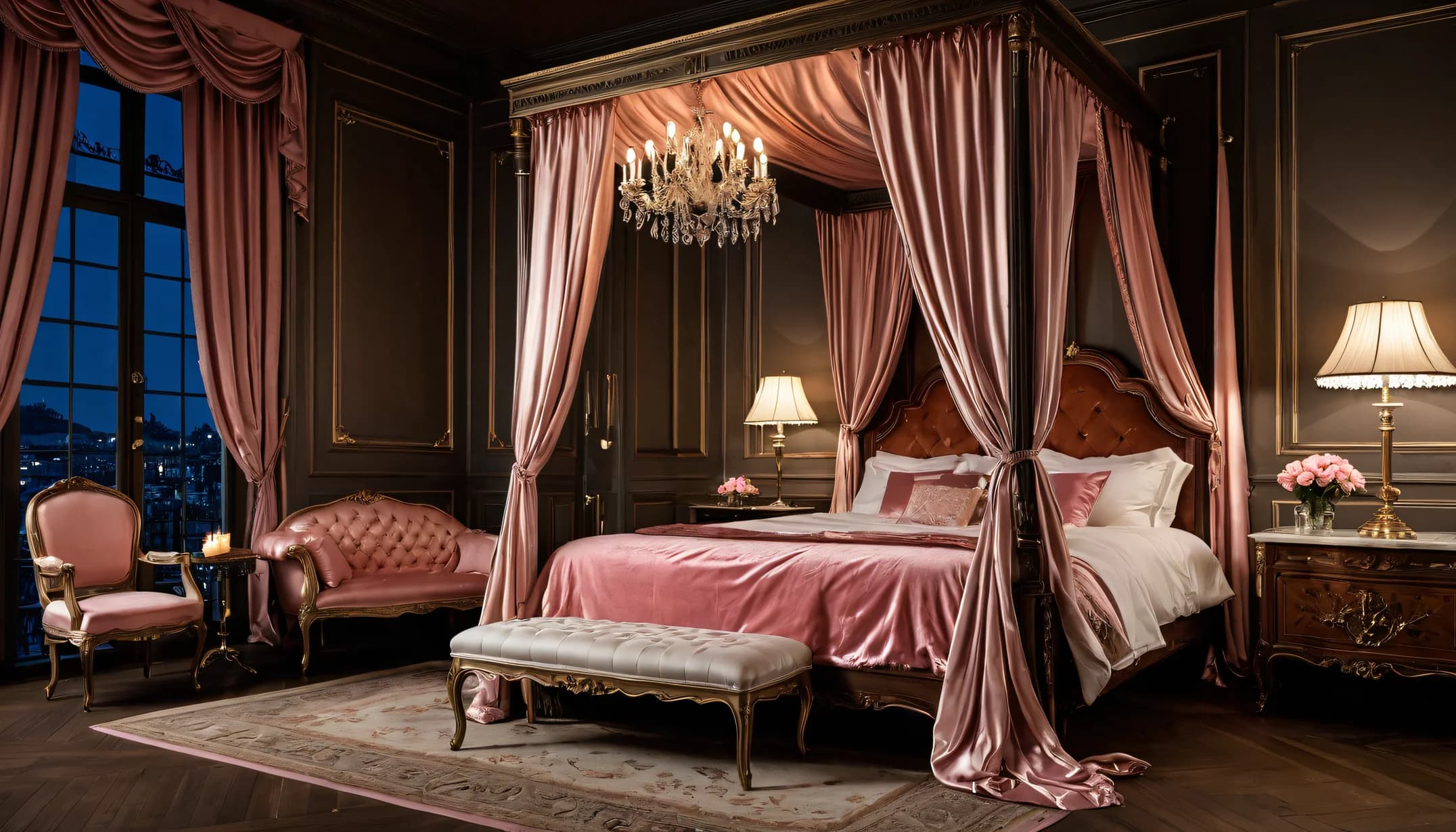
Color sets the mood. White callas feel calm and a little Parisian. The near-black and deep plum varieties are pure drama, which is why they turn up in our gothic romance bedroom next to oxblood velvet and brass. A mix of white and black, like the vase in the photo above, sits somewhere in between.
Three to five stems is plenty. Use a tall clear cylinder or a narrow dark vase, and cut the stems to slightly different lengths so they lean apart instead of standing in a row like a fence.
Choose by mood: sculptural, scented or lush
Before you pick a flower, decide what you want it to do.
Sculptural flowers are about shape. Callas, tulips, or a single branch of something seasonal. They're quiet, they last, and they look intentional with very little effort. This is the easiest place to start.
Scented flowers are about the air in the room. A potted jasmine, a few garden roses, one gardenia. They change how a room feels the moment you walk in, which is wonderful, and also a lot. Pick one.
Lush flowers are about abundance. A low, loose bunch of peonies or garden roses spilling over the rim of a bowl. They feel generous and a little indulgent, which makes them right for an anniversary or a long weekend, and a bit much for every day.
The scented ones: jasmine, gardenia, tuberose and garden roses
Jasmine. Rich and sweet, and strongest in the evening, which is part of its romance. A potted jasmine near a window is a living scent. It blooms for weeks, and you can carry it out of the room if it's too much.
Gardenia. Creamy and heady. One bloom floating in a shallow bowl can fill a small room, so start with one.
Tuberose. One of the most famous notes in perfume, with a long reputation as an evening flower. In a room it's very intense. Use a single stem, well away from the bed.
Garden roses. The classic. Old-fashioned garden roses usually smell far better than the tight, long-stemmed roses at the supermarket, so if scent is the point, ask a florist for fragrant varieties. Petals on the bed is a cliché for a reason, but a small bowl of roses on the dresser does the same job with less cleanup.
Strong floral scents give some people headaches, and a flower that smelled lovely at the florist can feel very different at midnight in a closed room. If either of you is unsure, start with a low-scent flower and add fragrance later.
Can't keep a jasmine plant alive? A jasmine candle gives you the scent without the watering. Light it an hour before bed and blow it out before you sleep.
The quiet ones, for scent-sensitive couples
If one of you gets headaches from fragrance or sneezes around pollen, you can still have flowers.
- Calla lilies, which have little to no scent.
- Tulips, which are close to scent-free and keep growing in the vase, bending toward the light.
- Roses bred with little fragrance, which describes most standard florist roses.
- Greenery, a few leafy branches in a tall vase.
- Good faux stems, more on those below.
Whatever you choose, change the vase water every couple of days. Stale vase water is where a lot of "flower smell" really comes from.
Where flowers go in a bedroom (and where they don't)
- On the dresser, where you can see them from the bed. You get the view without the flowers next to your face all night.
- Beside a lamp, not under a ceiling light. Side light from a lamp throws the shadows of the stems onto the wall. Our guide to lighting a bedroom for intimacy covers warm, low sources.
- One arrangement, not three. One good vase looks deliberate. Three small ones look like leftovers.
- Not on the nightstand, unless it's a single low-scent stem. Nightstands get bumped, and a strong scent by your pillow is a lot at 2 a.m.
- Not right next to a candle. Dry petals and leaves catch more easily than you'd think, and vases tip.
Flowers by Braise style
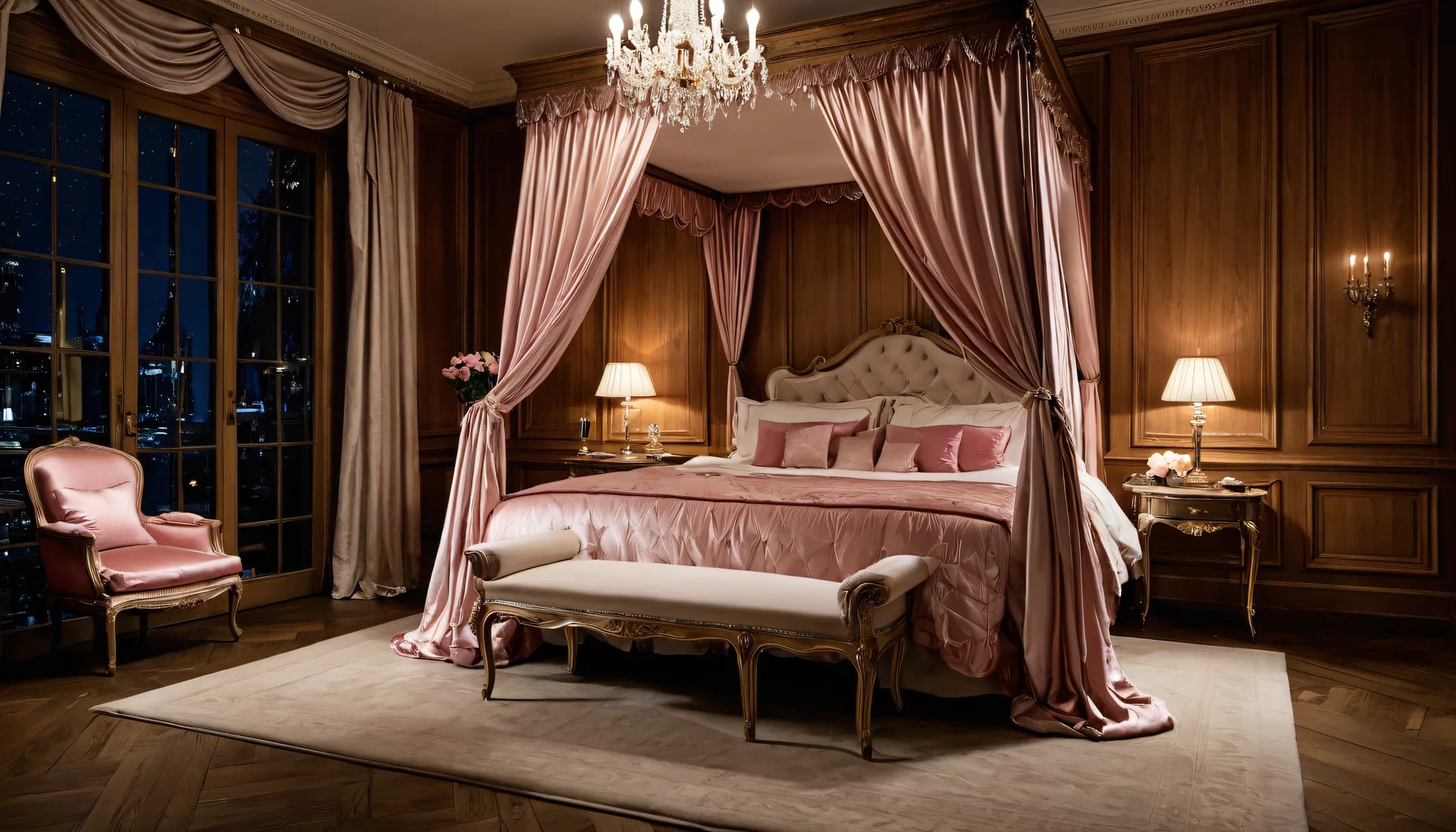
[Parisian Boudoir](/styles/parisian-boudoir). White callas or blush garden roses in cut glass or a gilt vase, ideally near a soft floral print or an old mirror.
Gothic Romance. Black or deep plum callas, burgundy roses and a few dark dahlias, in tarnished brass or dark glass.
[Warm Organic](/styles/warm-organic). A single branch or a few long stems in an earthy stoneware jug, with lots of space around them. Dried grasses suit this look too, and they last for months.
If you have a cat or dog: what to skip
Plenty of bedroom favorites are on the ASPCA's list of plants that are toxic to pets. Here's where the flowers in this guide stand, according to the ASPCA's plant database:
- True lilies (Stargazer, Oriental, Easter lilies and daylilies). Skip them entirely if you have a cat. Even a little pollen or a sip of the vase water can cause serious kidney damage in cats.
- Calla lilies. Despite the name, they aren't true lilies. They're still toxic to cats and dogs: they contain insoluble calcium oxalate crystals, which irritate the mouth and can cause drooling, vomiting and trouble swallowing.
- Peonies. Toxic to cats and dogs, and can cause vomiting and diarrhea.
- Gardenias. Toxic to cats and dogs, usually causing mild vomiting or diarrhea, sometimes hives.
- Tulips. Toxic to cats and dogs, with the bulb the most concentrated part.
- Lavender. Toxic to cats and dogs, and can cause nausea and vomiting.
- Tuberose. We couldn't find it in the ASPCA's database, so we can't call it safe. Keep it well out of reach, or skip it.
- Roses. Listed as non-toxic to cats and dogs. The thorns are the real hazard, so strip the lower ones.
- Jasmine. True jasmine (Jasminum) is listed as non-toxic. Check the plant tag, because several unrelated plants are sold as "jasmine," including gardenia, which is sometimes called cape jasmine.
The ASPCA also notes that eating any plant can upset a pet's stomach, so even the safe ones belong where curious noses can't reach.
Making them last, and when faux stems make sense
- Cut the stems at an angle before they go into water, and trim them again every few days.
- Strip any leaves that would sit below the waterline.
- Change the water every couple of days.
- Keep the vase away from radiators, sunny windowsills and the fruit bowl. Ripening fruit shortens the life of cut flowers.
- If you use true lilies in a home without cats, pull the orange anthers as the flowers open. The pollen stains linen badly.
Callas often last a week or more in a vase. Garden roses and peonies are gone sooner, which is part of their charm.
Good faux stems make sense in three cases: a cat that chews everything, someone in the house who reacts to pollen, or a craving for black callas in the middle of winter. Choose a few realistic stems over a big cheap bunch, and treat them like real ones: a good vase, a lamp beside them and space around them.
Flowers are one of the cheapest ways to change how a room feels, and three stems on a dresser count. For a special night they're one part of a bigger picture. Our guide to planning an intimate evening covers the rest, and how to make your bedroom romantic takes on the whole room.
Common questions
What flowers are good for a bedroom?
Low-scent, long-lasting flowers are the easiest: calla lilies, tulips and roses with little fragrance. If you want scent, choose one fragrant thing, like a potted jasmine or a few garden roses, and keep it on the dresser rather than beside the bed.
Are calla lilies toxic to cats?
Yes. The ASPCA lists calla lilies as toxic to cats and dogs. They aren't true lilies, which can cause kidney damage in cats, but they can cause mouth irritation, drooling, vomiting and trouble swallowing.
What is the best smelling flower for a bedroom?
Jasmine, gardenia, tuberose and fragrant garden roses are the classics. Jasmine and garden roses are the gentler choices. Gardenia and tuberose are very strong, so start with a single bloom or stem.
What do calla lilies mean?
In the old Victorian language of flowers, callas were linked with purity and elegance, which is why white ones are so common at weddings. Dark callas carry less tradition and are mostly chosen for drama.
Is it OK to sleep with flowers in your bedroom?
For most people, yes. Strong scents and pollen can bother some people, so keep fragrant flowers on the dresser instead of the nightstand, change the water often, and choose low-scent flowers if anyone gets headaches.
Scenes to try
All scenesScenes are ideas for an evening at home, each tied to a room style, with a pause word built in.
Small things, well chosen
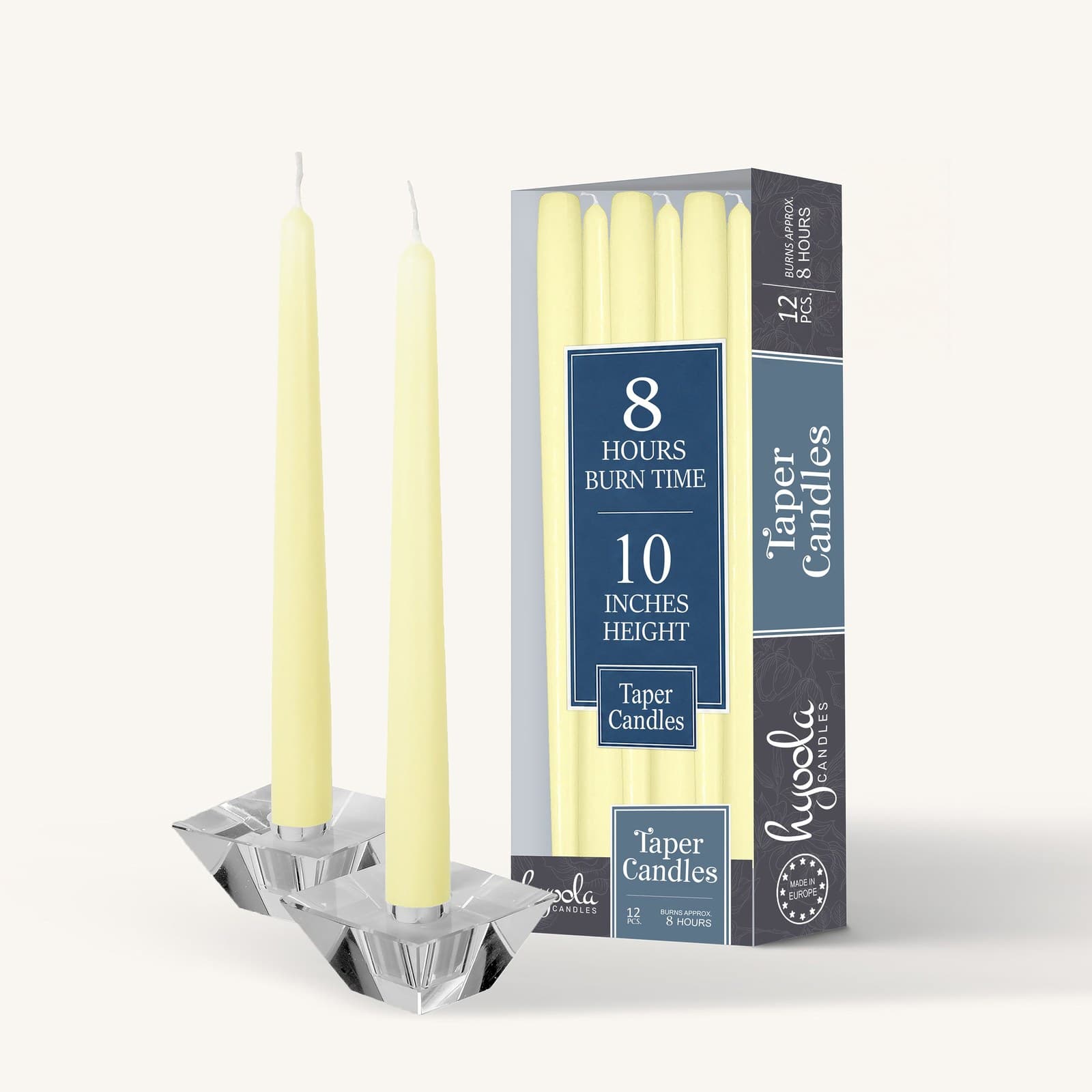
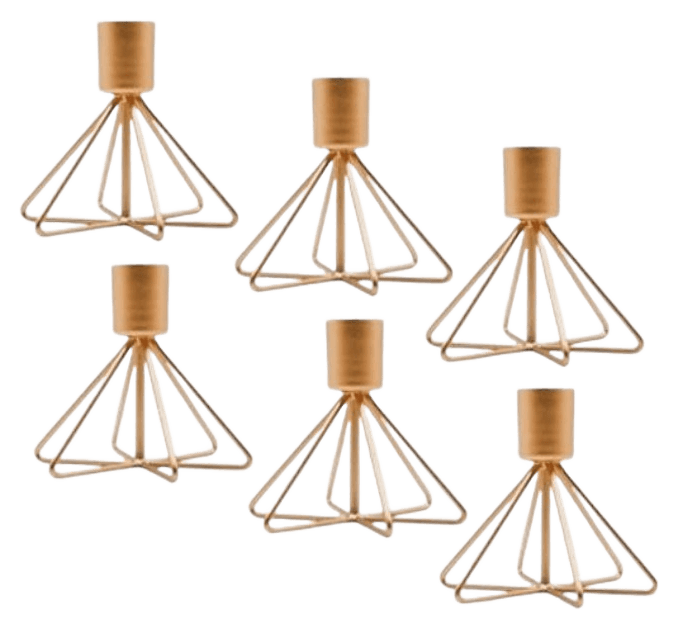
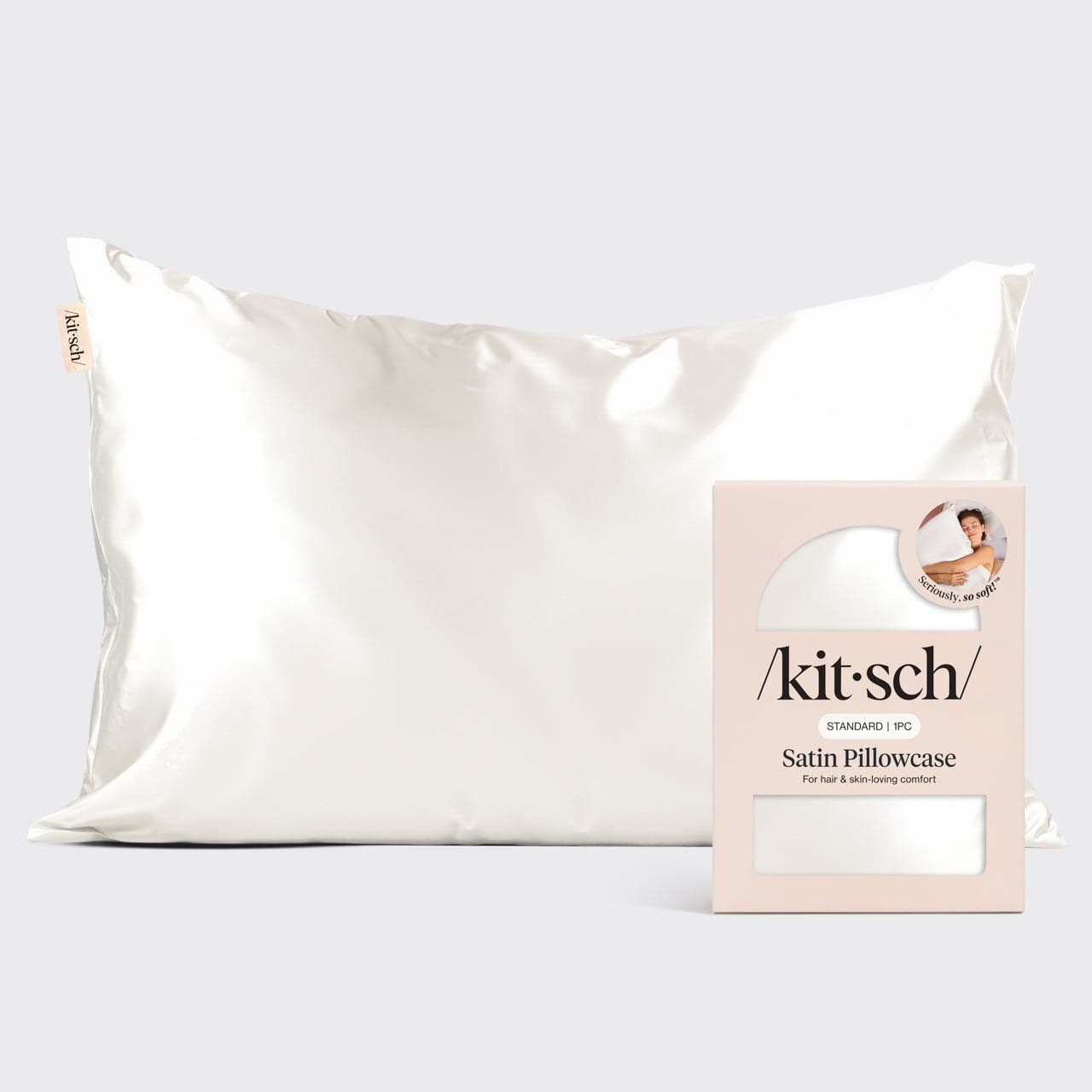
A few small pieces that do a lot of what this guide describes, each one easy to add to a room this week.
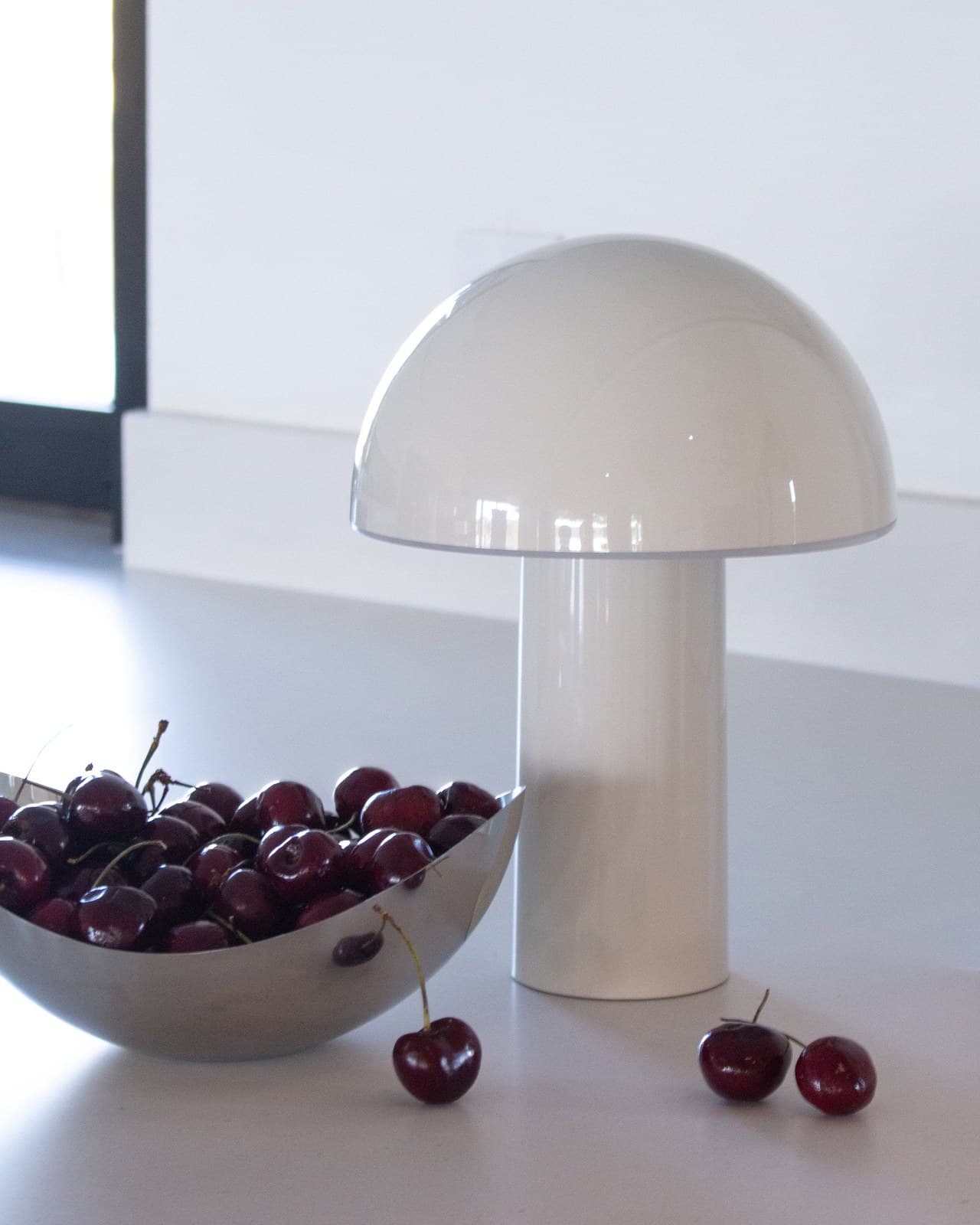
Picked by us, never paid for. We may earn a small commission if you buy.