The Handstand
Also called: Indian Handstand, Indian Headstand
A steeper take on the wheelbarrow: the receiving partner's hands are on the floor and their legs are wrapped high around the standing partner, almost upside down.
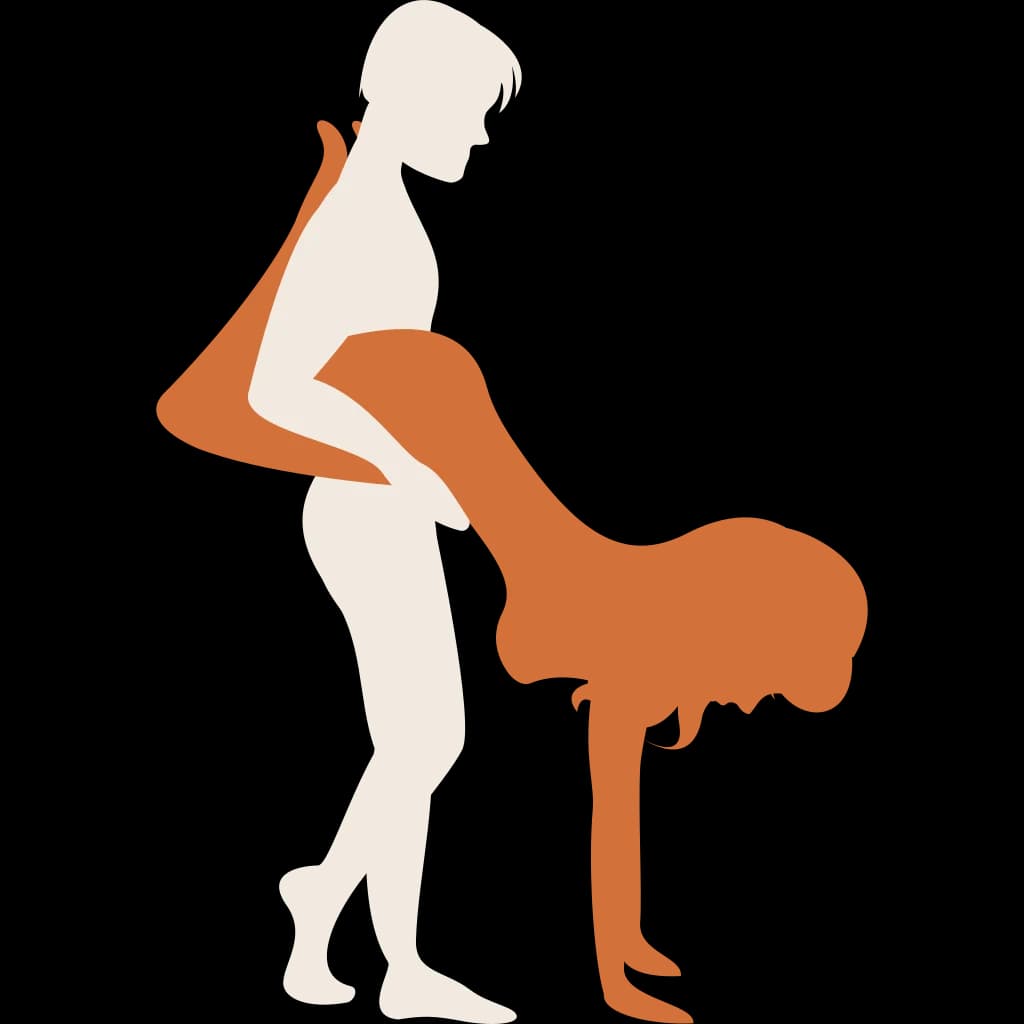
The receiving partner starts on hands and knees at the edge of the bed, or bends forward from standing with hands on the floor. The standing partner stands behind them, takes their hips, and lifts. Instead of holding the legs at hip height as in the wheelbarrow, the receiving partner wraps their legs high around the standing partner's waist, or hooks one leg up over a shoulder, so their hips sit higher and their body tilts steeply toward the floor. The receiving partner keeps their arms straight and their palms flat, taking their weight on their hands. The standing partner holds them firmly by the hips or thighs and controls all of the movement. Bending the receiving partner's elbows lowers the head and steepens the angle; keeping them straight is more stable.
A bold, acrobatic change of pace with a very steep angle. It's for couples who enjoy a physical challenge.
Have the receiving partner rest their forearms on the edge of the bed or a low ottoman instead of the floor. Keeping one foot down makes it a much gentler standing bend.
Lower down the same way you came up: the standing partner sets the legs down before the receiving partner tries to stand.
This one takes real strength and balance. Skip it with a bad back, wrists or knees, and try it near the bed so there's somewhere soft to land.
Agree on it before you try it, use plenty of lube, and either of you can stop at any point. This guide is general information, not medical advice.