The Backbend
Also called: The Backward Slide
The seated partner leans back against the side of the bed; the partner on top straddles them facing in, then arches all the way back to the floor.
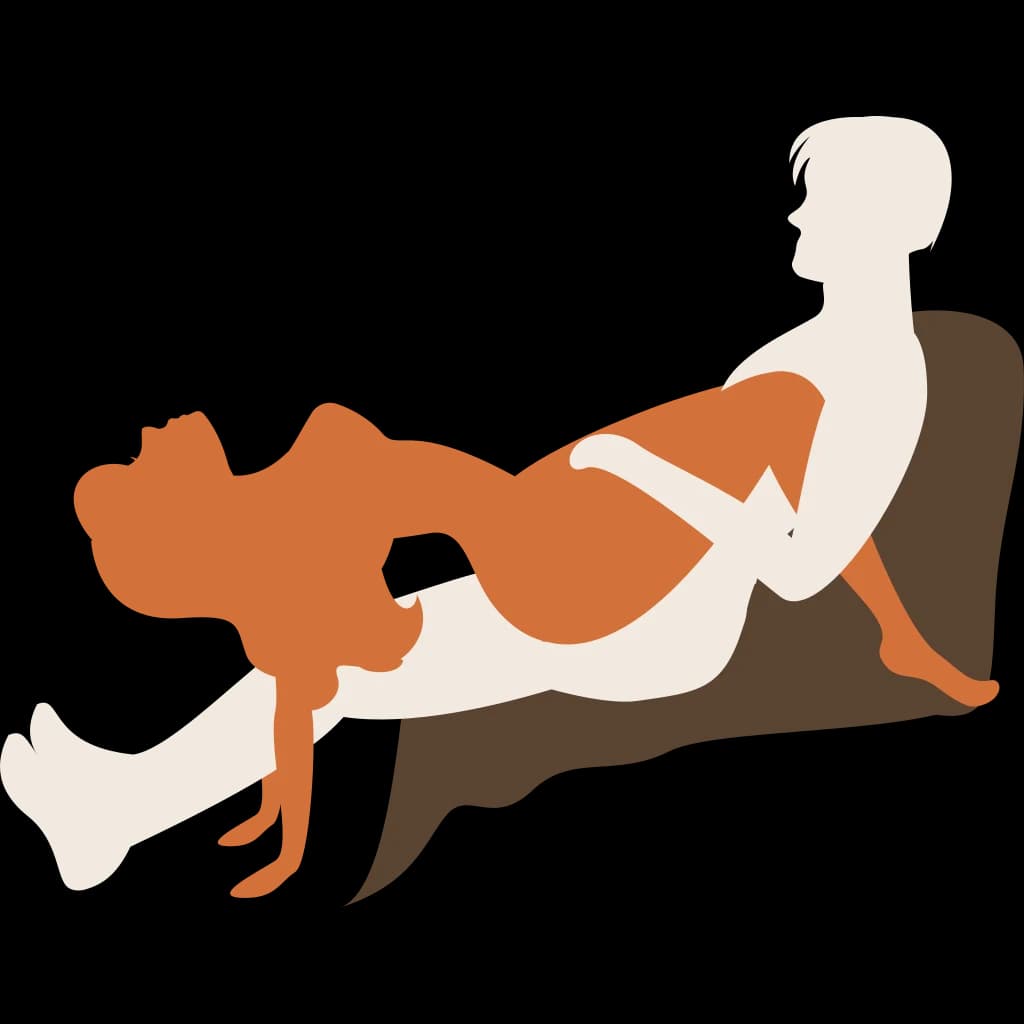
One partner sits on the floor with their back against the side of the bed or a sofa, legs stretched straight out in front. The other partner straddles their lap facing them, feet tucked back toward the bed, and lowers down. Once connected, the partner on top slowly leans backward, supported at first by the seated partner's hands on their waist, until their own hands reach the floor beyond the seated partner's knees. The top partner's weight now rests on their hands and on the seated partner's lap, chest and belly arching up. The seated partner keeps holding their hips and guides small rocking movements. Arching less, with hands on the seated partner's shins, is gentler on the back and wrists; arching fully gives the sharpest angle.
A dramatic, stretched-out angle for flexible partners, with the seated partner in control of rhythm and a full view.
Stack pillows on the floor behind the seated partner's feet so the arching partner can lie back onto them instead of holding a full backbend.
Come up the same way you went down: slowly, with the seated partner pulling you back by the waist.
This asks a lot of the lower back, wrists and neck. Skip it with back trouble, and stop if anything twinges. Pain is a signal, not a hurdle.
A thick rug under both of you makes the floor a lot kinder to hands and hips.
Affiliate links. We may earn a commission, and it never affects our recommendations.
Agree on it before you try it, use plenty of lube, and either of you can stop at any point. This guide is general information, not medical advice.