The Squat Balance
The receiving partner squats on the edge of a sturdy table or counter, facing away and leaning back into the standing partner's chest. Rear entry with a full-body hug.
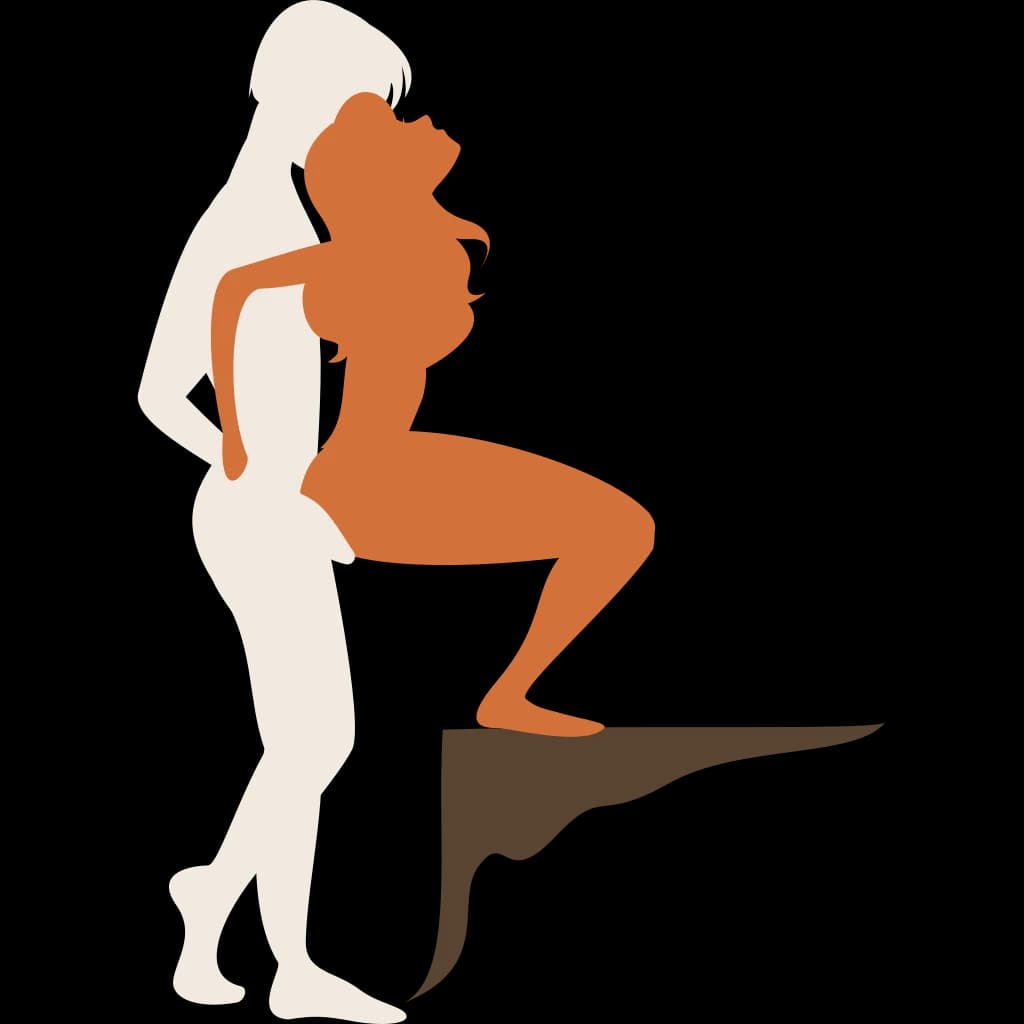
Pick a sturdy surface that puts the receiving partner's hips at about the standing partner's hip height: a heavy table, a kitchen counter or a high bed. The receiving partner climbs up and squats near the edge, feet flat and apart, facing away from the standing partner. The standing partner steps in close behind and wraps their arms around the receiving partner's waist or hips. The receiving partner leans back against the standing partner's chest and reaches back to hold their hips, neck or shoulders for balance. From here, the receiving partner can raise and lower themselves from the squat while the standing partner holds steady, or the standing partner can lead. Leaning further back changes the angle; squatting lower makes it deeper.
Rear entry with lots of skin contact. The standing partner's hands are right where they can reach around to the front.
Let the receiving partner kneel on the surface instead of squatting, which is much easier on the thighs and just as close.
Test the surface before you need it. If it wobbles under one person, it will be worse with two.
Squatting is hard on knees, and a slip from a table hurts. Only use furniture that's solid and stable, and skip the squat if your knees complain.
Agree on it before you try it, use plenty of lube, and either of you can stop at any point. This guide is general information, not medical advice.