The Right Angle
Also called: Tabletop
The receiving partner lies back on a hip-height table with legs wrapped around the standing partner's waist. Like the bed edge, only higher, so nobody has to crouch.
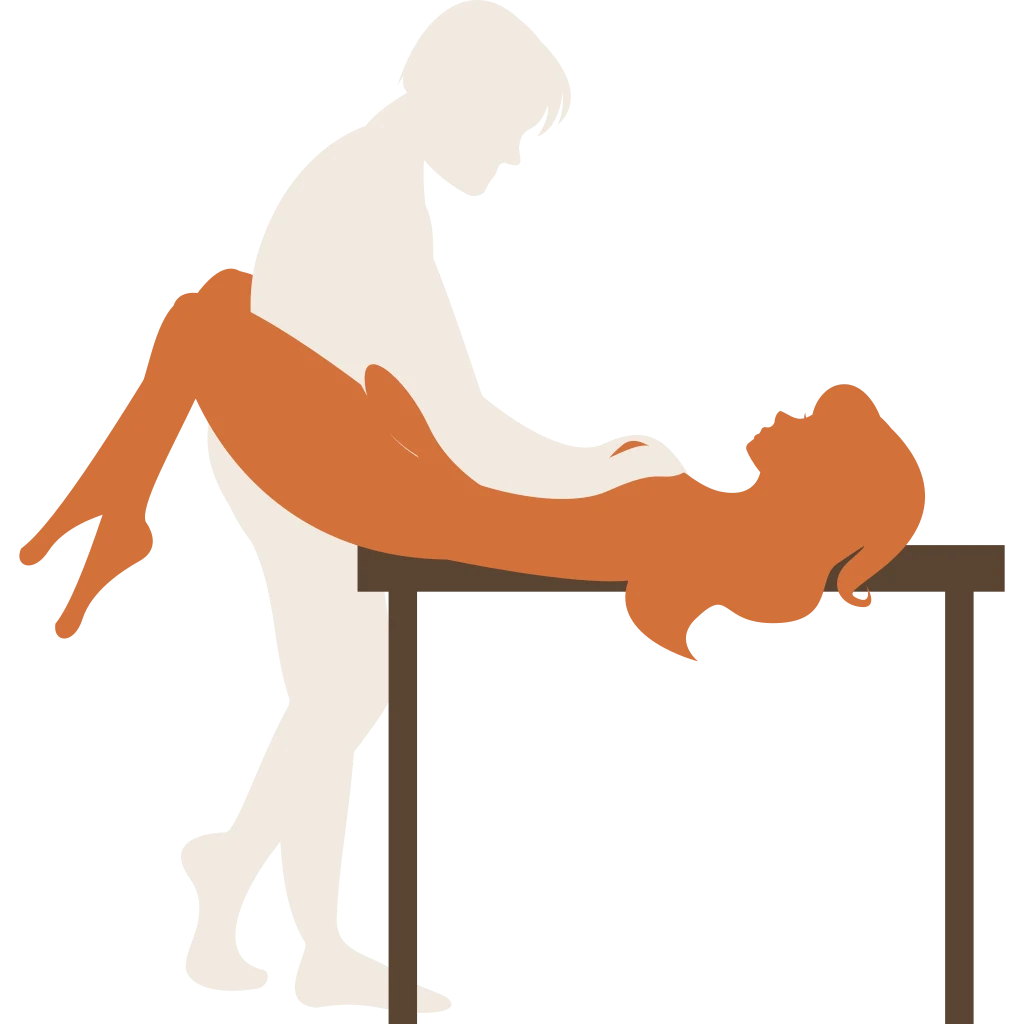
Choose a sturdy table, desk or dresser that puts the receiving partner's hips at the standing partner's hip height. The receiving partner lies back on it with their hips at the very edge and their back flat, head on a folded towel or cushion. The standing partner steps in between their legs, and the receiving partner wraps their legs around the standing partner's waist or hooks their knees over their hips, ankles crossed behind. The standing partner rests their hands on the table or on the receiving partner's waist and leads the pace, while the receiving partner can grip the table edge above their head or keep their hands free. This differs from the bed edge because the extra height lets the standing partner stay upright instead of bending or squatting. Pulling the knees up toward the chest makes it deeper; letting the legs hang loosely makes it gentler.
Couples whose bed is too low for edge positions, and both partners' hands are free for touch.
Put a folded blanket under the receiving partner's back and hips. If the table is a little low, the standing partner can widen their stance instead of bending.
The receiving partner can pull the standing partner in with their legs to set the rhythm, so it isn't one-sided.
Only use furniture that's rock solid and won't slide. Pad hard edges, and check the table holds well before you rely on it.
Agree on it before you try it, use plenty of lube, and either of you can stop at any point. This guide is general information, not medical advice.