Tabletop Wheelbarrow
Also called: The Padlock
A friendlier wheelbarrow. The receiving partner's hands rest on a table or dresser instead of the floor, with their legs wrapped back around the standing partner's waist.
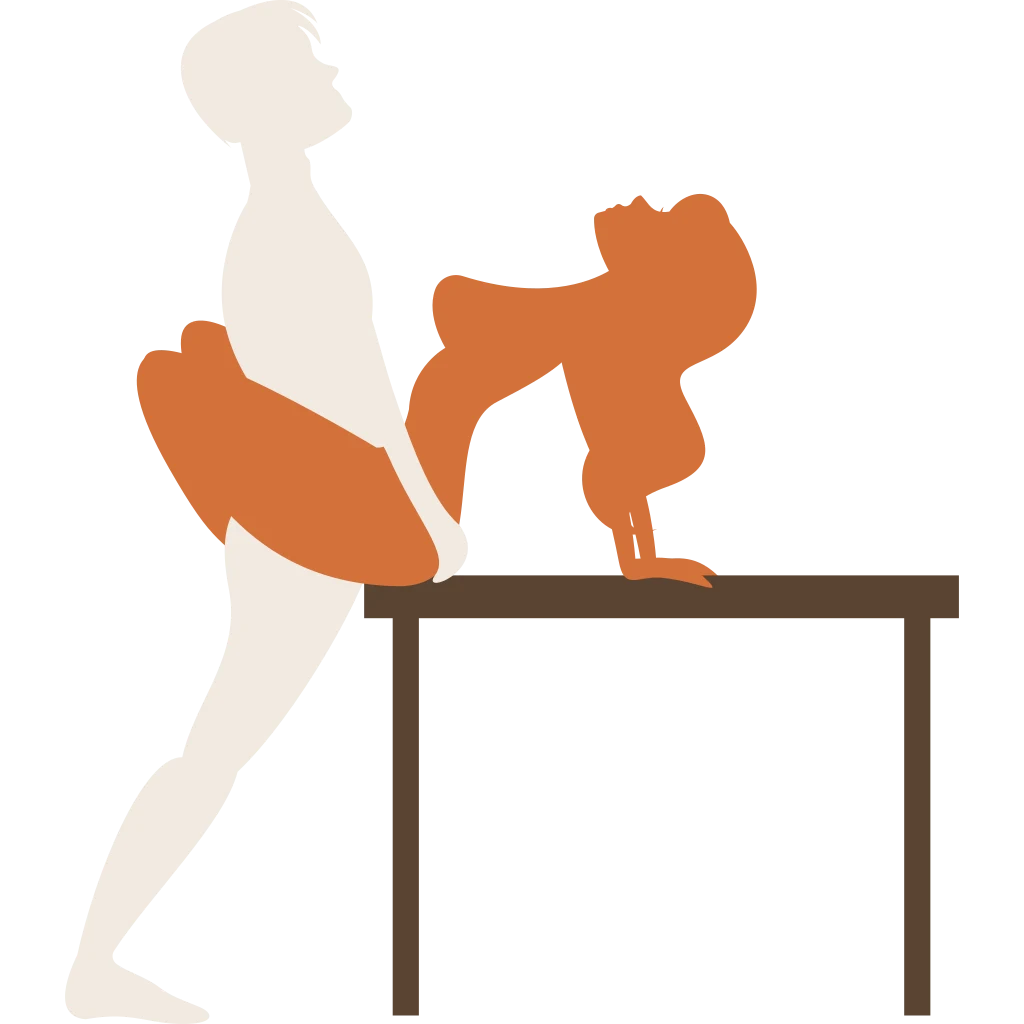
The receiving partner stands facing a sturdy table, dresser or counter and bends forward to put their hands flat on top of it, arms straight. The standing partner stands close behind them. The standing partner then lifts the receiving partner's thighs one at a time, and the receiving partner wraps their legs back around the standing partner's waist, crossing their ankles if they can. Most of the receiving partner's weight goes into their hands on the table and into the standing partner's hold on their hips. Movement comes from the standing partner in small strokes. A higher surface keeps the receiving partner more upright and easier on the arms; a lower one tips them forward for a steeper angle.
The depth and the bold feel of a wheelbarrow without the floor-level strain on the arms. The standing partner sets the pace.
The receiving partner can keep their toes on the floor and just lift one leg to the standing partner's hip.
Stand the standing partner's feet a little wider than their hips. It makes the whole thing much steadier.
Use a heavy surface that won't slide or tip, and go easy on the wrists. Lower the legs back to the floor before anyone gets tired.
Agree on it before you try it, use plenty of lube, and either of you can stop at any point. This guide is general information, not medical advice.