Reverse Lie-Down
Also called: The X-Rated, Flat reverse cowgirl
Reverse cowgirl taken all the way down: the partner on top lies flat along their partner's legs, face toward their feet.
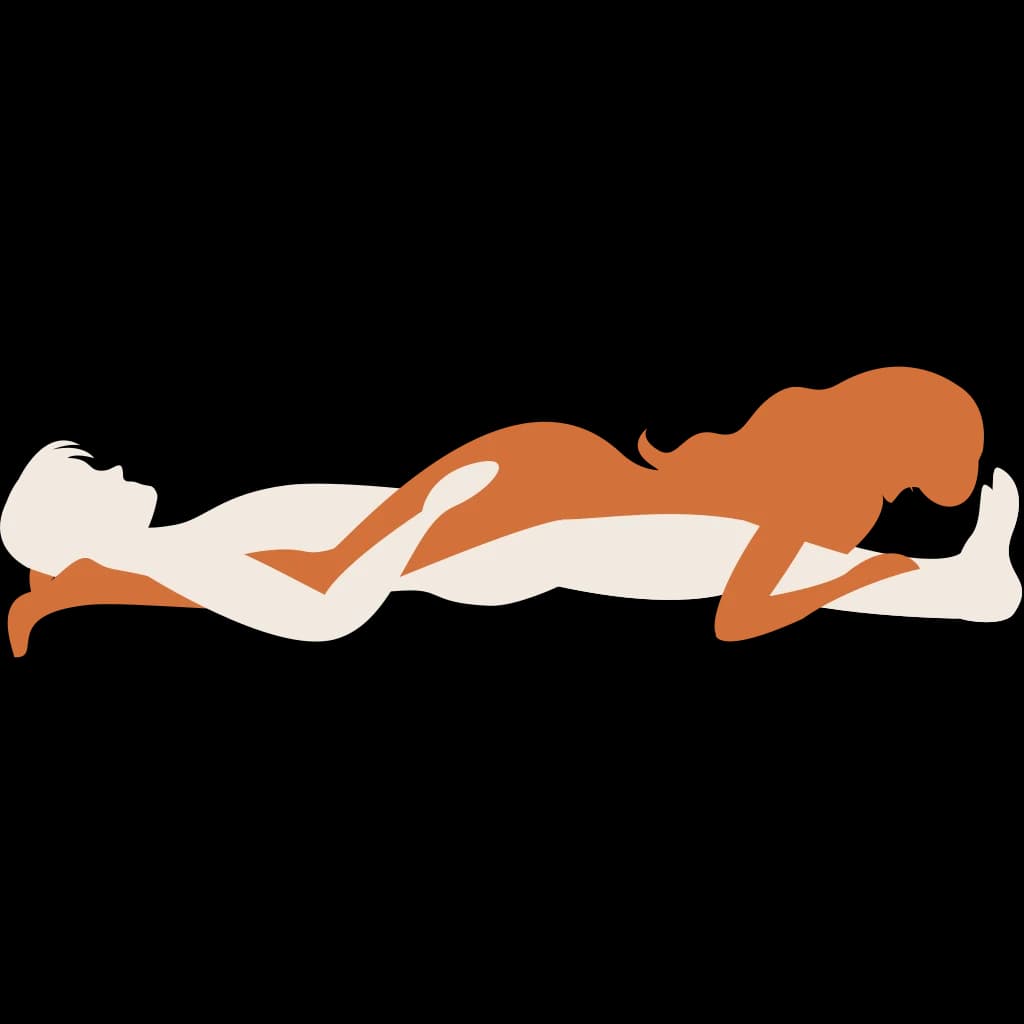
The bottom partner lies on their back with legs straight and together. The partner on top straddles them facing their feet, lowers down as in reverse cowgirl, then walks their hands forward along the bottom partner's legs until they're lying face down along them. Once there, they stretch their own legs back one at a time so they lie straight beside the bottom partner's torso or shoulders. Their weight rests on their chest and forearms over the bottom partner's shins, and they move by sliding their body forward and back a short way. The bottom partner's hands rest on their hips or back to guide or steady them. Bending the knees a little and pushing with the toes gives more control; staying fully flat makes it slower and more about pressure than movement.
A restful, full-length press of bodies with a reverse angle, and a lovely view for the partner underneath. The partner on top can rest their head between movements.
Stop halfway, leaning forward on your hands with knees still bent, if lying all the way flat feels awkward.
Slow, gliding movement works better than lifting. Use plenty of lubricant so the slide feels smooth.
This one can bend a penis at an awkward angle if the partner on top lifts or tips too far, too fast. Keep movement small and controlled.
Agree on it before you try it, use plenty of lube, and either of you can stop at any point. This guide is general information, not medical advice.